Homeowner guide
Winterizing a Cabin or Seasonal Home in East-Central Minnesota
Either drain the plumbing completely, or keep the building heated with a reliable system, a low-temperature alarm and someone checking it. The expensive mistake is the middle ground: leaving heat on at a low setpoint with nobody watching and no alarm, so a failure in January is discovered in March.
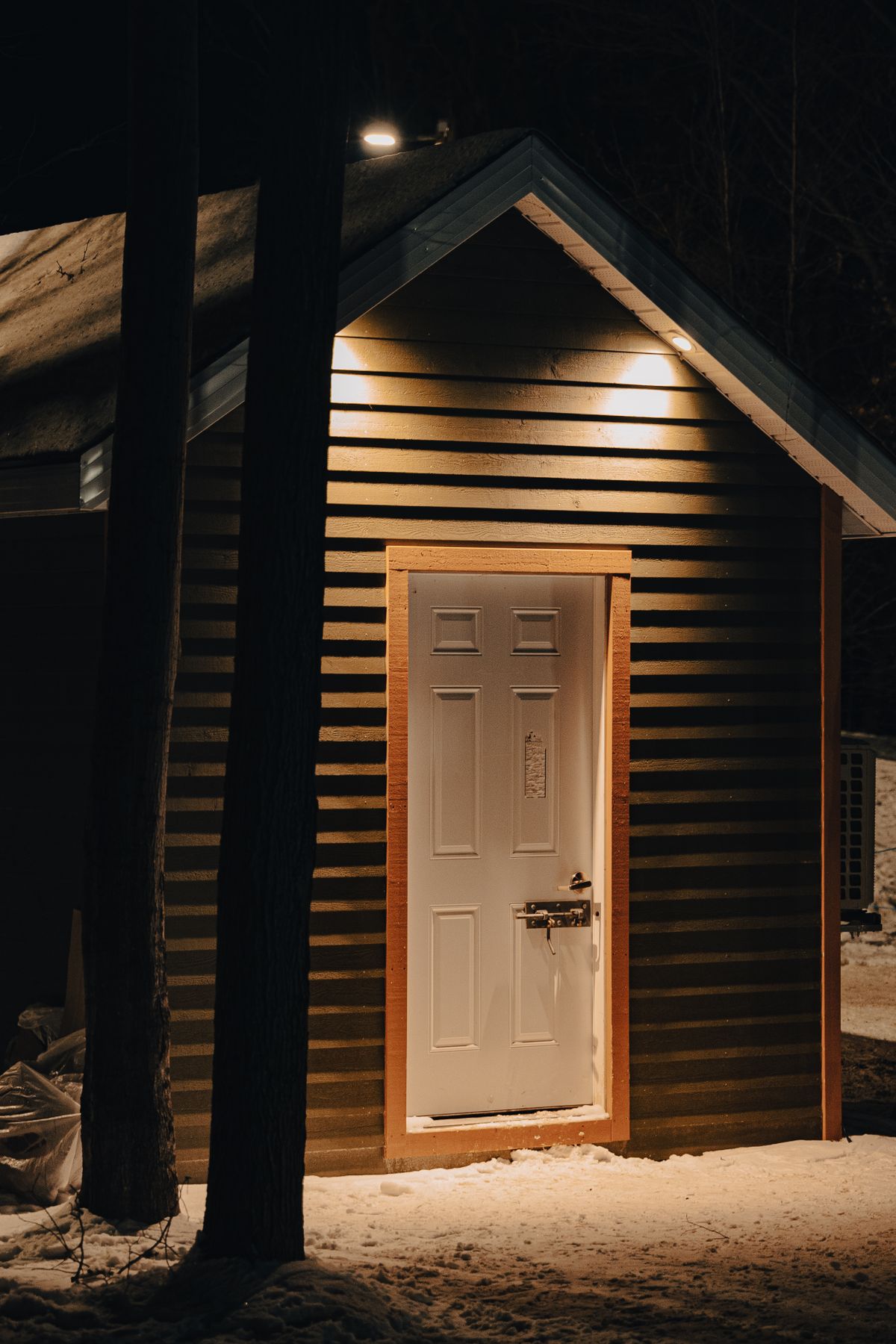
Decide which strategy you are actually using
There are two legitimate approaches to a seasonal property, and the damage almost always happens to owners who have drifted into neither.
The first is full winterization: water shut off at the source, lines drained, traps and toilets protected with antifreeze, water heater drained. Nothing to freeze, so nothing to lose.
The second is keeping the building warm: heat maintained at around 50 to 55 degrees, cabinet doors open on exterior walls, a low-temperature alarm fitted, and a real person checking on the place periodically.
What causes burst pipes is the hybrid: heat left on low, water still in the lines, no alarm, nobody visiting. One failed ignitor in January and the discovery comes in spring, along with the insurance claim.
If you are keeping the heat on
- Set the thermostat around 50 to 55 degrees, not the lowest setting it offers. The margin matters when a cold snap arrives.
- Fit a low-temperature alarm. Where there is reliable internet, a smart thermostat with alerts works. Where there is not, and in much of Pine and Burnett counties there is not, a cellular alarm is the answer.
- Open cabinet doors under every sink on an exterior wall so warm room air reaches the pipes.
- Fill the propane tank before winter and keep it above roughly 30 percent. Propane vaporises poorly in deep cold when the tank is low, which is exactly when the furnace needs it most.
- Get the furnace serviced in autumn. A tune-up on a building nobody occupies is worth more than one on a house where somebody would notice a problem in an hour.
- Change the filter before you close up. A restricted filter is a common cause of a mid-winter lockout.
- Make sure someone local has a key and knows they may be called.
If you are draining the system
- Shut off the water at the main and drain from the lowest point.
- Blow the lines out with compressed air if you can. Gravity alone leaves water in low spots.
- Add antifreeze to every trap: sinks, showers, floor drains and toilets.
- Drain the water heater completely, and switch it off so it cannot fire dry.
- Do not forget outdoor spigots, the ice-maker line and any water softener.
- If a dishwasher or washing machine is present, drain those too.
Why this matters more here than most places
Our service area is full of seasonal property. Sturgeon Lake, Siren, Webster, Danbury, Onamia and Balsam Lake are heavy with cabins, and Hinckley has a great many rentals and second homes that sit empty for weeks.
It is also genuinely cold, for long enough that a failure is not survivable by luck. A furnace that quits on the 3rd of January in an unoccupied building is a very different event from one that quits in an occupied house.
When to stop reading and call
Book the autumn service visit in September or October. By late November the whole county has remembered at once, and the schedule for a forty-mile call tightens considerably. Ring (612) 600-5041. Repair visits are a flat $89 diagnostic, applied to the cost of the repair when you approve the work.
Related services
Straight answers
Related questions
What temperature should I leave a cabin set at over winter?
Around 50 to 55 degrees if you are keeping water in the lines. Going lower saves very little fuel and removes the safety margin you need when a cold snap arrives or the system stumbles.
Is a smart thermostat enough for a remote cabin?
Only if the property has genuinely reliable internet, which a lot of rural properties in Pine and Burnett counties do not. Where connectivity is uncertain, a cellular low-temperature alarm is the more dependable choice.
Can a mini-split heat a cabin through a Minnesota winter?
A cold-climate ductless unit can carry a small to mid-sized, reasonably insulated cabin, and being controllable from your phone is a real advantage. For a larger or draughtier building you will want multiple heads or a backup heat source.
Do you service seasonal properties when the owner is not there?
Yes, that is a routine part of our work. Arrange access with us in advance and we will handle the visit and report back with what we found.
Need someone to look at it?
Call (612) 600-5041. Serving Pine City and 50 miles around, 24 hours a day, 7 days a week for emergencies.