Homeowner guide
Furnace Not Heating? Work Through This Before You Call Anyone
Before anything else, check five things: the furnace power switch, the circuit breaker, the thermostat batteries and setting, the air filter, and that the front panel is latched shut. Any one of them will stop a perfectly healthy furnace, and together they account for a large share of no-heat calls.
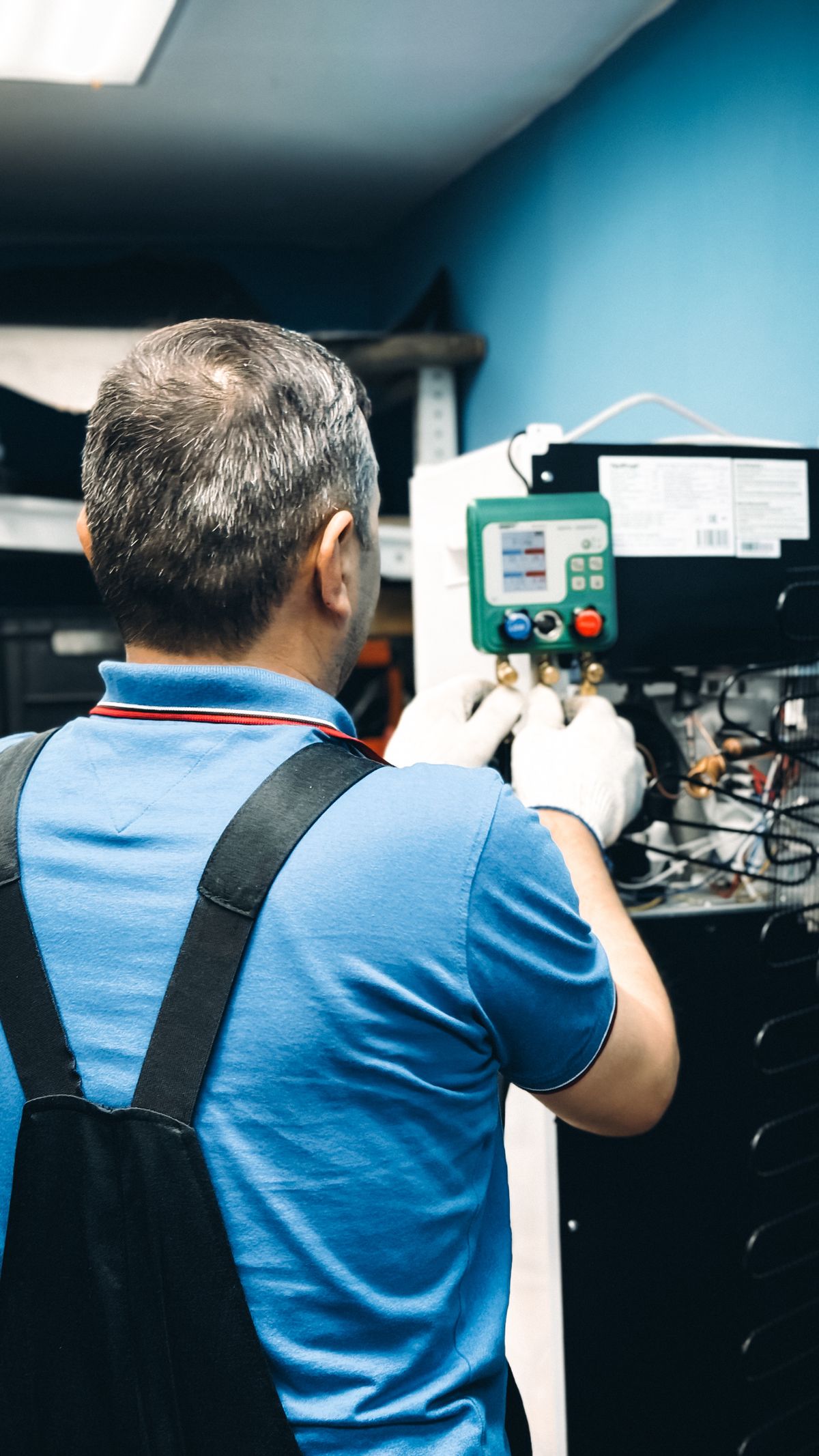
The five checks, in order
Work through these before you pay anyone to come out. None of them require tools, and if one of them is the answer you have saved yourself a service call.
- The furnace switch. It looks like an ordinary light switch, usually on a wall nearby or on a ceiling joist next to the unit. People knock it off while carrying things past.
- The breaker. Find the furnace breaker in the panel and cycle it fully off, then on. A breaker can look seated and still be tripped.
- The thermostat. Fresh batteries, set to HEAT, fan set to AUTO, and the setpoint several degrees above the current room temperature.
- The filter. Pull it out and hold it to a light. If you cannot see light through it, that is very likely your problem. Run the system with the filter out temporarily to confirm.
- The front panel. Most furnaces have a safety switch that cuts power unless the blower door is properly closed and latched.
Read the light on the furnace
Nearly every furnace built in the last thirty years has a small LED behind a viewing window on the front. It blinks a pattern that identifies the fault, and the legend for that pattern is printed on a sticker inside the blower door.
Count the flashes and read the sticker before you call. Telling us "three flashes, pressure switch" over the phone means the right part is on the truck when we arrive, which frequently turns two visits into one.
What the common faults actually mean
| Symptom | Usual cause | Can you fix it? |
|---|---|---|
| Nothing happens at all | Power, switch, breaker or door switch | Often yes |
| Blower runs, air is cold | Burner not staying lit, or fan set to ON | Sometimes |
| Lights then shuts off after 30-90 seconds | Dirty flame sensor or failed ignitor | No, but it is an inexpensive repair |
| Clicks repeatedly, never lights | Ignitor, gas supply or control board | No |
| Runs briefly then short cycles | Restricted airflow or a limit switch tripping | Change the filter first |
| Boom or rumble at start-up | Delayed ignition, gas building before it lights | No. Stop using it and call |
| Water pooling at the base | Blocked condensate drain on a high-efficiency unit | Sometimes |
Protect the pipes while you wait
If the house is losing temperature in deep cold, deal with the plumbing before you worry about comfort. Open the cabinet doors under sinks on exterior walls so warm air reaches the pipes, and let a cold tap run at a trickle.
Close doors to rooms you are not using to concentrate whatever heat remains. If you have a wood stove or fireplace that is safe and in working order, use it. Do not, under any circumstances, heat the house with a gas oven or an unvented outdoor propane heater.
When to stop reading and call
Stop and call immediately if you smell gas, if the carbon monoxide alarm has sounded, if there is a boom at start-up, or if the house is below 60 degrees and still dropping. Ring (612) 600-5041. Repair visits are a flat $89 diagnostic, applied to the cost of the repair when you approve the work.
Related services
Straight answers
Related questions
Why does my furnace light then shut off after a minute?
That pattern almost always means the furnace cannot confirm its own flame. The usual culprit is a flame sensor coated in oxide, which is a cheap and quick repair. It can also be a failing ignitor, a blocked flue, or a pressure switch reacting to a plugged condensate line.
Can I clean the flame sensor myself?
Physically it is simple, but it means opening a gas appliance, and getting it wrong has consequences that a saved service call does not justify. If you are comfortable and competent around gas equipment, it is a known DIY job. If there is any doubt, it is not the place to learn.
Should I keep resetting the furnace?
Once, to clear a one-off lockout, is reasonable. Repeatedly is not. The lockout is a safety response to a real condition, and forcing a furnace to keep trying to light in a fault condition is how a small problem becomes a dangerous one.
How cold does a Minnesota house get without heat?
It depends on insulation, wind and outdoor temperature, but in a hard cold snap a typical home can approach freezing inside within a day. That is why we treat winter no-heat calls as genuine emergencies rather than next-morning appointments.
Need someone to look at it?
Call (612) 600-5041. Serving Pine City and 50 miles around, 24 hours a day, 7 days a week for emergencies.